A mother-daughter duo are travelling back in time to make old machinery relevant in today’s world. Be Natural soap owners Sarah and Susan Lucas believe in the reduction of waste, so much so that they have their labels printed from a 1940s machine.
The Taranaki Aviation Transportation and Technology Museum (TATATM) in New Plymouth is a working museum that produces prints using heavy machinery that dates back to the 1800s.
Brittany Baker
Sarah and Susan Lucas own and operate an organic soap business and believe in reducing waste.
Sarah says the soap business began while she was pregnant with her third child.
“I did a lot of research on toxins and I was really conscious about what I was putting on my skin,” she says.
Alan Penfold said this German machine carries its weight by producing 7000 printed sheets an hour.
She approached her mother, Susan, who was looking for something to do.
“The two of us made our first batch and people really loved it and asked, ‘Can we have some’?”
The labels for Be Natural are printed on an old, letterpress machine at TATATM.
The women’s soap business stays squeaky clean by sourcing materials that may otherwise be thrown away or forgotten.
“This used to be an old garage,” Sarah says as she opens her arms to show off where the soap is made.
Sarah says she had the idea for the soap labels when she spotted some print work at a restaurant.
“I saw these beer mats that said, ‘Printed by TATATM’. So, I rang them and we went over some proofs and they printed 15,000 labels,” Sarah says.
“The guys also avoid waste and reuse the lead needed for prints. This lovely stamp is from the 1880s.”
TATATM volunteers Alan Penfold and Terry Foster dedicate their time piecing together parts from the past to create classic prints.
The volunteers use the Heidleberg Platen – a German machine made in the 1940s.
“It’s a great piece of machinery that was donated by Taranaki Newspapers,” Penfold says.
He says he puts together all the letters, punctuation, and spacing.
“I love hand-setting and design. I place it all together in what we call a ‘printer’s pie’,” Penfold says.
He is enthusiastic about the old letterpressing machines.
“It’s going back to our old trade, before we were superseded by technology. Some of these letters or stamps are nowhere else in the world.
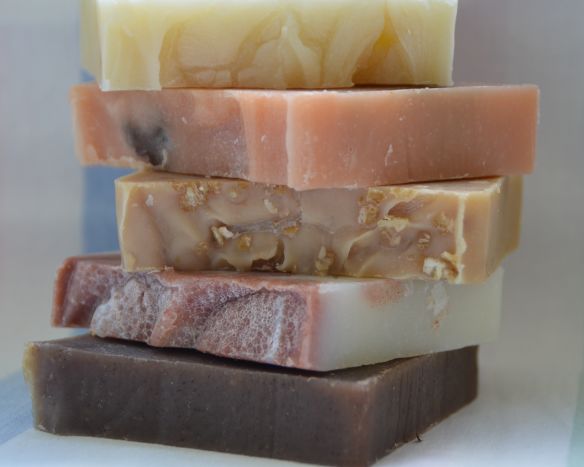
Be Natural’s soap making additives Normally, the word additives conjures up thoughts of artificial substances added to food for various reasons. In the world of natural soap making however, additives are an integral part of the soap being produced and often form the therapeutic and medicinal benefits held within the soap. Be Natural Uses a …
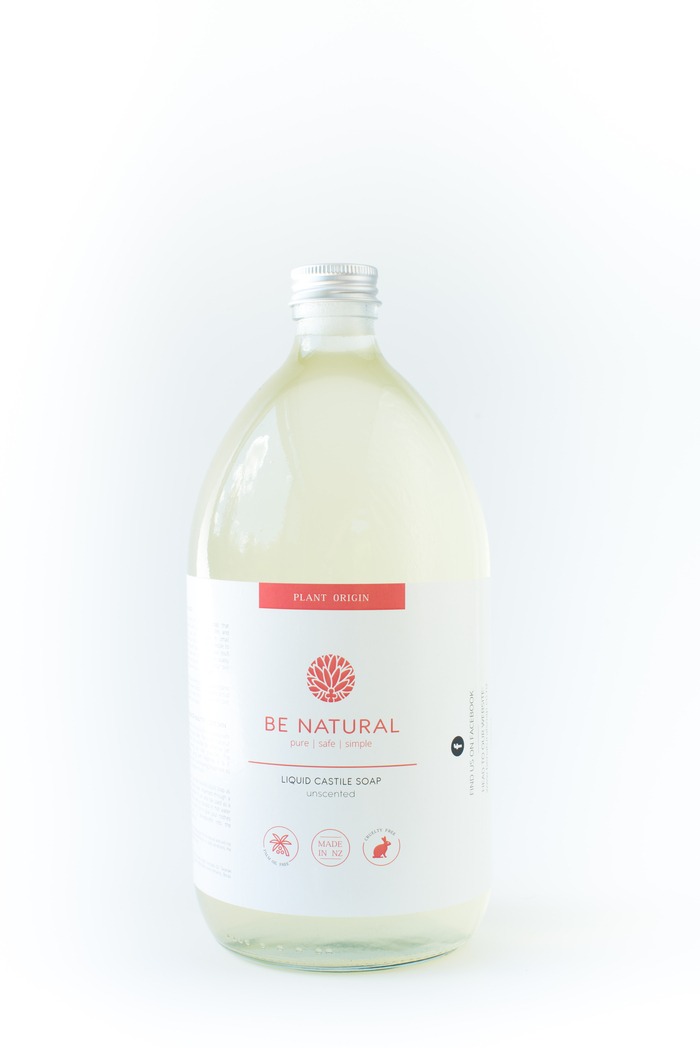
Natural Liquid Soap Be Natural’s Organic Liquid Soap is a pure castile natural liquid soap that you can use in many different ways, including as a hand soap. It is made with organic oils of coconut, New Zealand Avocado and essential oils of Sweet Orange and Lavender – which makes a rich lather and …
Young Skin – how to avoid chemical overload. Did you know that a babies skin and children’s skin is more vulnerable to the effects of toxic chemicals than adults? This is because their immune systems and central nervous system are still developing, which results in less elimination of chemical toxins than adults. On top of …
How Substances Get Absorbed into the Bloodstream. The primary way chemicals, toxins, and other substances enter our bloodstream is through our digestive system, which is responsible for breaking down food into nutrients and fuel for our bodies. But an equally important, way that substances enter our systems is through skin absorption. Skin absorption occurs …

All About Our Labelling!
A mother-daughter duo are travelling back in time to make old machinery relevant in today’s world. Be Natural soap owners Sarah and Susan Lucas believe in the reduction of waste, so much so that they have their labels printed from a 1940s machine.
The Taranaki Aviation Transportation and Technology Museum (TATATM) in New Plymouth is a working museum that produces prints using heavy machinery that dates back to the 1800s.
Brittany Baker
Sarah and Susan Lucas own and operate an organic soap business and believe in reducing waste.
Sarah says the soap business began while she was pregnant with her third child.
“I did a lot of research on toxins and I was really conscious about what I was putting on my skin,” she says.
Alan Penfold said this German machine carries its weight by producing 7000 printed sheets an hour.
She approached her mother, Susan, who was looking for something to do.
“The two of us made our first batch and people really loved it and asked, ‘Can we have some’?”
The labels for Be Natural are printed on an old, letterpress machine at TATATM.
The women’s soap business stays squeaky clean by sourcing materials that may otherwise be thrown away or forgotten.
“This used to be an old garage,” Sarah says as she opens her arms to show off where the soap is made.
Sarah says she had the idea for the soap labels when she spotted some print work at a restaurant.
“I saw these beer mats that said, ‘Printed by TATATM’. So, I rang them and we went over some proofs and they printed 15,000 labels,” Sarah says.
“The guys also avoid waste and reuse the lead needed for prints. This lovely stamp is from the 1880s.”
TATATM volunteers Alan Penfold and Terry Foster dedicate their time piecing together parts from the past to create classic prints.
The volunteers use the Heidleberg Platen – a German machine made in the 1940s.
“It’s a great piece of machinery that was donated by Taranaki Newspapers,” Penfold says.
He says he puts together all the letters, punctuation, and spacing.
“I love hand-setting and design. I place it all together in what we call a ‘printer’s pie’,” Penfold says.
He is enthusiastic about the old letterpressing machines.
“It’s going back to our old trade, before we were superseded by technology. Some of these letters or stamps are nowhere else in the world.
“It’s recycling before recycling was a term.”
www.benaturalsoap.co.nz
Related Posts
Be Natural’s Natural Additives
Be Natural’s soap making additives Normally, the word additives conjures up thoughts of artificial substances added to food for various reasons. In the world of natural soap making however, additives are an integral part of the soap being produced and often form the therapeutic and medicinal benefits held within the soap. Be Natural Uses a …
Natural Liquid Soap – why is it beneficial?
Natural Liquid Soap Be Natural’s Organic Liquid Soap is a pure castile natural liquid soap that you can use in many different ways, including as a hand soap. It is made with organic oils of coconut, New Zealand Avocado and essential oils of Sweet Orange and Lavender – which makes a rich lather and …
Babies, Skin and Soap
Young Skin – how to avoid chemical overload. Did you know that a babies skin and children’s skin is more vulnerable to the effects of toxic chemicals than adults? This is because their immune systems and central nervous system are still developing, which results in less elimination of chemical toxins than adults. On top of …
How the Skin Absorbs Substances
How Substances Get Absorbed into the Bloodstream. The primary way chemicals, toxins, and other substances enter our bloodstream is through our digestive system, which is responsible for breaking down food into nutrients and fuel for our bodies. But an equally important, way that substances enter our systems is through skin absorption. Skin absorption occurs …